Elderflower Cordial, Fritters and 'Champagne': A Forager's Recipe Guide
For a fortnight each summer, the hedgerows announce themselves before you see them: a heavy, sweet smell somewhere between lychee and muscat, drifting off flat plates of tiny cream flowers. Elderflower is one of the most rewarding things to forage, partly because it is genuinely abundant, and partly because the window is so short that you have to pay attention. Miss it, and you wait a year. Catch it, and you can bottle June as cordial, fry it as fritters, and ferment it into the sparkly, faintly alcoholic brew that has been called champagne for as long as anyone can remember.
Identify Elder Before You Pick a Single Head
Elder (Sambucus nigra) is a shrub or small tree of hedgerows, woodland edges, railway embankments, allotment boundaries and waste ground. It tolerates being cut back hard, which is why it turns up so often along paths and field margins.
The leaves are the giveaway: opposite each other along the stem, pinnate, with five to seven oval, sharply serrated leaflets. Crush one and it smells rank — catty, some say. Older stems are grey and corky, with a labyrinth of ridges rather than smooth bark.
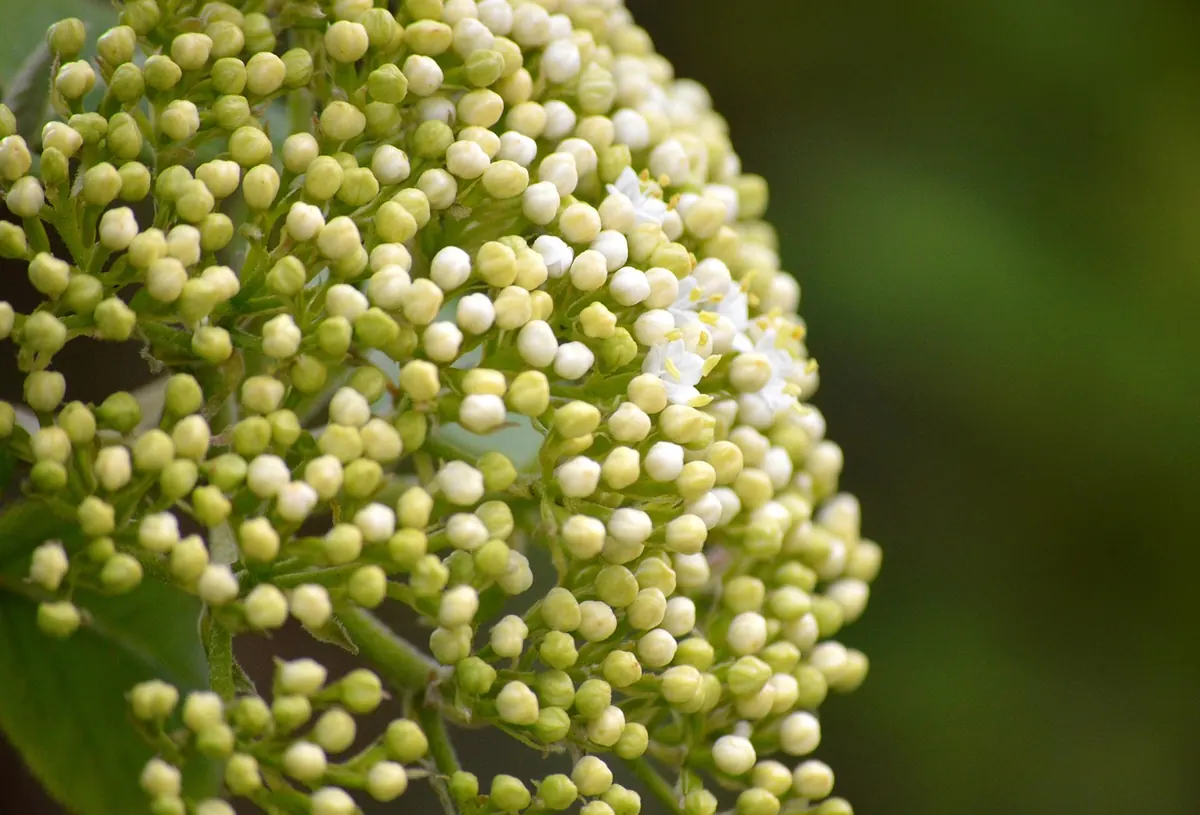
The flowers sit in flat-topped umbels, roughly 10–20cm across, each made up of dozens of tiny five-petalled blooms on a creamy, slightly domed head. If it looks like a saucer of cream sitting on a woody shrub, and smells like sweet white wine, you are in the right place. Later in the season those same bushes carry drooping clusters of small black berries, which need cooking before they go anywhere near a plate.
The usual warning about white flowers concerns umbellifers — cow parsley, hogweed, sweet cicely and their relatives. None of them is a woody shrub with opposite leaves, and their flower heads are arranged differently, but they are the reason the rule exists: never pick anything you have not identified properly. If you are unsure, walk on. Take a good field guide, or go out the first few times with somebody who already knows the plant. Wear gloves where hogweed grows: its sap can cause painful burns, particularly in strong sunlight.
How to Harvest Without Stripping the Bush
Timing matters more than technique. Elderflower runs from late May into mid-June in most of the UK, later in the north and at altitude, so a warm south-facing hedge may be over while a shaded lane nearby is still in bud. Pick on a dry morning after a dry spell; rain washes the pollen and much of the scent away.
- Choose heads at the right stage. Most flowers open, a few buds still tight. Fully open heads go brown in the bag; tight buds give less flavour.
- Snip, don't pull. Cut the stalk just below the head with scissors. Tearing at branches damages the bush.
- Take a little from each bush. A handful per shrub, then move on. Leave plenty of heads to set berries for birds — and for your own autumn foraging.
- Avoid busy roadsides, sprayed verges and dog-walking spots. Plants filter and hold what lands on them.
- Shake, don't wash. Insects come off with a firm shake. Rinsing under the tap knocks out the pollen, which is where the flavour lives.
- Use them the same day. Elderflower fades fast. Overnight in a cool room is the limit.
Check the rules where you are. Picking common wild flowers and foliage for personal use is generally tolerated in the UK, but uprooting plants is not, and many nature reserves, Sites of Special Scientific Interest and private estates restrict foraging outright. Ask the landowner if you can, and never take from a place that has asked you not to.
Elderflower Cordial
This is the recipe to master first. It keeps for weeks in the fridge, freezes well, and makes a decent gin and tonic taste like a proper summer drink.
Ingredients
- 20–25 elderflower heads, shaken clean
- 1.5kg granulated sugar
- 1.5 litres water
- 2 unwaxed lemons, zest pared in strips and fruit sliced
- 30g citric acid (from a chemist or homebrew shop)
Method
- Sterilise your bottles: wash them in hot soapy water, rinse, then dry in a low oven or fill with boiling water and drain.
- Warm the sugar and water in a large pan, stirring until the sugar dissolves. Bring to the edge of a boil, then take it off the heat.
- Put the flowers, lemon zest, lemon slices and citric acid into a large bowl or clean bucket.
- Pour the hot syrup over, stir once, and cover with a clean cloth held with a band. Leave somewhere cool for 24–48 hours, stirring twice.
- Strain through muslin or a clean tea towel. Let it drip; squeezing hard pulls out bitterness.
- Bottle and refrigerate. It keeps a few weeks chilled, or freeze in plastic bottles — leave a few centimetres of headspace so they don't split.
Dilute roughly one part cordial to four or five parts still or sparkling water, over plenty of ice, with mint and a slice of lemon. It also works spooned over strawberries, stirred into yoghurt, or used to sweeten a fruit salad.
Elderflower Fritters
These are the reason to keep a few heads back from the cordial pan. They take ten minutes and must be eaten almost as soon as they come out of the oil — a fritter that sits around turns limp.
Trim each head into small sprays, leaving a short stalk as a handle. Whisk 100g plain flour, 1 tbsp cornflour and a pinch of salt with 150–175ml of very cold sparkling water or lager, just until smooth; lumps are fine and overworking makes them tough. Heat sunflower or rapeseed oil to about 180°C in a deep pan — a cube of bread should brown in roughly thirty seconds. Dip a flower head in the batter, let the excess drip off, and fry for a minute or so on each side until pale gold. Drain on kitchen paper, dust generously with caster sugar, and serve straight away with lemon wedges.
Elderflower "Champagne"
This is a natural ferment, using the wild yeasts on the flowers. It is gently alcoholic, so it is not one for children, and it is fizzy enough to demand respect.
Dissolve 700g granulated sugar in 4.5 litres of water — warm it slightly, then let it cool to room temperature. Add 15–20 flower heads, the zest and juice of four lemons, and 2 tbsp white wine vinegar to a sterilised bucket. Cover with a clean cloth and stir once a day for five or six days, until it smells winey and the bubbles pick up. Strain, then bottle into plastic bottles, leaving a few centimetres of headspace. Keep them cool and loosen the caps daily to release the pressure for the first week.
Never seal a young ferment in glass. Pressure builds faster than you expect, and bottles can shatter. Plastic gives you a warning squeeze; glass does not.
After a week or two it is ready. Chill it thoroughly, open it over a sink or outdoors, and don't shake it. If you would rather avoid alcohol altogether, drink it young, or stick to the cordial.
A Short Field Checklist
Before you set out: take a field guide, scissors, a cloth bag or basket, and a note of who owns the land. Pick from the middle of a stand, not the path edge. Leave some heads on every bush. Get your haul home and into sugar, batter or syrup the same day. If you are pregnant, on medication, or planning to give wild food or fermented drinks to children, check with a pharmacist or GP first — wild ingredients are not automatically gentle just because they grow themselves.
And if the season passes you by this year, note the spot. Elder is faithful. The same bush will smell of lychees again next June, roughly a week earlier than you expect.
Photo: neelam279 / Pixabay
Growing Wild Edibles in a Small Kitchen Garden: Wild Garlic, Sorrel and Land Cress
Wild garlic, sorrel and land cress all thrive in shade and in pots. Here's how to sow, grow and harvest...
Herbal Teas from the Hedgerow: Safe Recipes for Nettle, Mint and Chamomile
A practical beginner's guide to picking, drying and blending nettle, mint and chamomile from British...
About Us